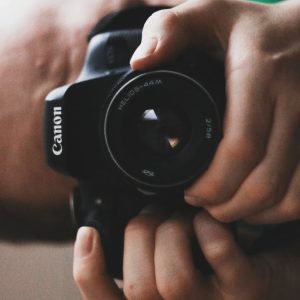
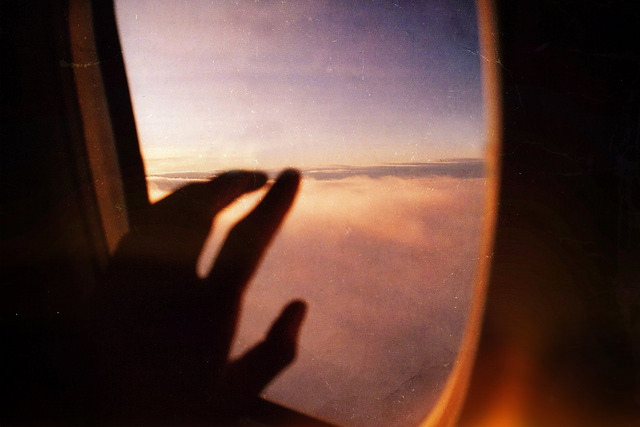
A great photo by Open, on tumblr.
A great photo by Open, on tumblr.
Just… wow! So atmospheric!
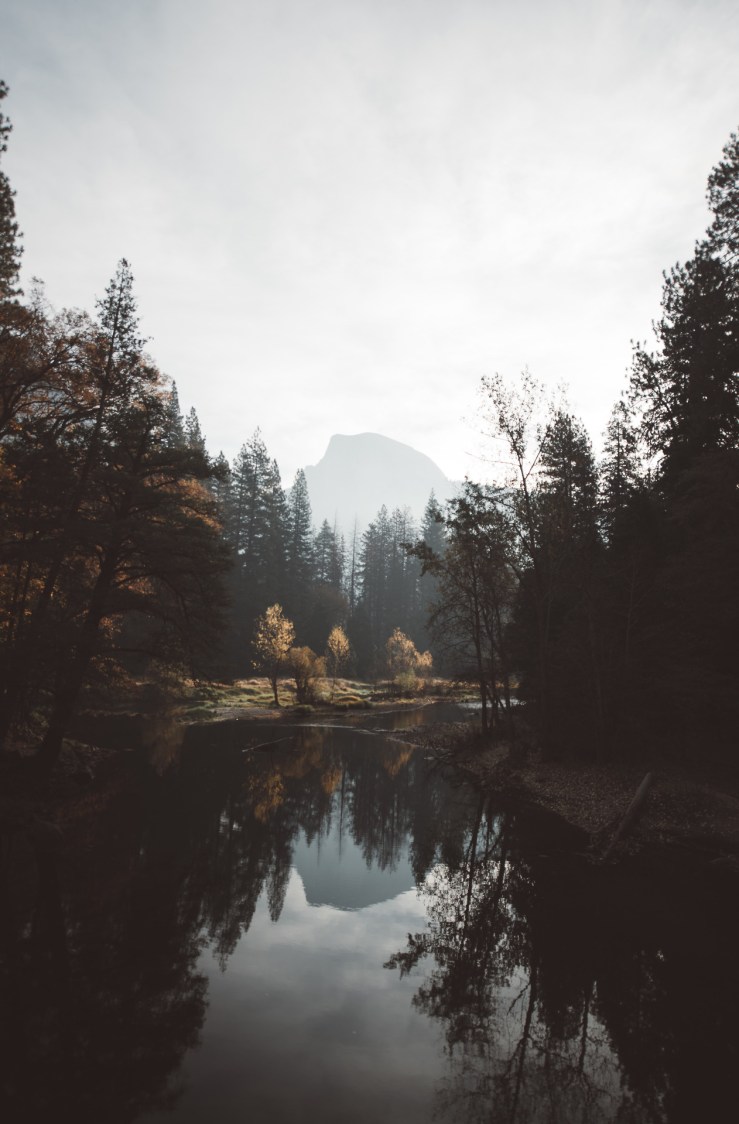
Yosemite’s Half Dome, October 2017 – photographed by Megan Evans on Photography.
A shot I took recently on my phone #mobilephotography:
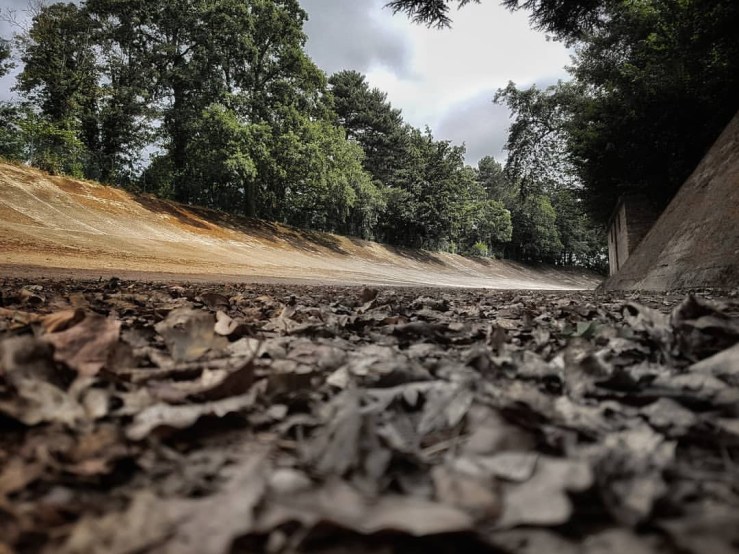
Brooklands: From Past to Present (at Brooklands Museum)
Took photos of the “Yellow Sky” (UK weather phenomenon):
f/3.5, 1/160s, ISO 800.
WB: Cloudy/Shade.
Accurate Colours/White Balance (Beginner, exercise) – indoors, television, 8.30pm (yellow Tungsten lights).
P mode (P. AE)- used ‘wrong’ WB’s to create warmer, cooler & natural-looking photos.
P mode (P. AE) – restrictive. AE = Auto Exposure.
Taking photos of a bottle of water, on coffee table, with TV as background.
f/5.6 photos – television cabinet blurred; bottle crisp & sharp. Short shutter.
f/32 photos – everything in focus. However, shutter speed was slower with f/16 – f/32 photos, meaning camera shake was more noticeable. In future, a tripod will be needed. Photos also seemed over-exposed (due to Auto ISO). A lower ISO would’ve solved this – so MANUAL mode would’ve been better for a photo with landscapes in mind.
Canon Companion app tells me:
“with a large aperture lens, e.g. EF 50mm f/1.8 II, Aperture effect would be even more pronounced.”
In other words, a specialist one-purpose lens would’ve been better than an all-purpose, jack-of-all-trades 18-55mm kit lens.
So: Av mode perfect for Portraits/bokeh, but not for landscapes.
Canon 750D Basic Manual – page 113, Chapter 5 – Advanced Operations, for reference! (Av, Tv, P, M)
13 Oct: bought Canon 750D/collected from John Lewis.
15 Oct: first day of usage. Despite being glad that I’ve finally got a new camera, I’ve dreamed of having a DSLR for a long time – after all, it’s what all the professionals use!
But strangely, since buying my camera, I’ve felt too scared to use it. It’s a DSLR. It’s a big deal.
It was a nice, hot, sunny day, so I thought why not. I started off slow, first using the Auto modes:
-AUTO modes (“Basic Zone” on Mode Dial) TOO RESTRICTIVE!!!
-Manual modes (Mode Dial: “Creative Zone”) similar to Canon A610 & Pro mode on my Samsung Galaxy S7 – I know how to use them (therefore, barely a learning curve.)
-Had felt overwhelmed by thought of DSLR – not anymore!
*** LEARN – EXPOSURE BRACKETING ***
Learn: Aperture/shutter settings for different situations.
-Connected wirelessly to Samsung Galaxy S7, using Canon Connect app, via WiFi/NFC. Really simple to set up, although have to go to camera ‘Menu’ to share pics & open app on S7 to receive images/use remote shutter.
My first real experience using an SLR was probably in my childhood, but last year, in the run-up to getting my own DSLR, I used my Dad’s Nikon D3100 a lot.
However, it wasn’t until just before getting my own DSLR that I considered keeping a diary of my photography journey – to keep a track record of settings I’d used, in order to learn the art of photography.
As I’ve probably mentioned before, I was getting a DSLR to replace my ageing Canon Powershot A610 compact camera – now 12 years old. On holiday with my family, 20 August 2017, was my first entry in my DSLR diary, using my Dad’s Nikon:
-Nikon D3100. Lens: DX, AF-S Nikkor 18-55 VR 1:3.5-5.6G
-Could’ve used a telephoto lens for taking a photo of eagle/red kite in farmer’s field, on walk at Fermyn Woods Country Park, Northamptonshire.
-Used P mode, Manual Focus, Burst mode. Varying focal lengths, depending on subject.
-Wear glasses, or adjust viewfinder focus – some subjects out of focus in final results (can these details be recovered in software, like Adobe Lightroom?).
For this post, I had to consult my diary. Last year, on 25 Aug 2017, I’d visited the Wex Photographic shop in Norwich, and saw the EOS 750D and 200D. The buttons on the 750D, while not providing enough ‘travel,’ seemed okay once the camera was turned on – but in the event they weren’t okay, I noted that the touchscreen facility was there.
With the 200D, I noted that it was a comfortable, very light camera (even with the 18-55mm kit lens attached), but noted that the d-pad style buttons on the rear were too small – and my fingers aren’t exactly what you’d call ‘big.’
The 750D had 19 cross-type AF points, to the 200D’s 9 AF points – with only 1 cross-type AF point at the centre. That meant more choice when it came to focusing and image composition.
Whereas the 750D could only record video 720p at 50fps or 1080p at 30fps, the 200D was the favoured choice of many reviewers for vlogging, offering Full HD, 1080p 60fps video recording.
Shooting ahead a couple of months, my attention was now on which camera to pick. As I don’t want to overcomplicate things, these were my notes:
-Nikon D5600 great. Downside: video quality. Also, 39 AF points, but only 9 cross-type – same as 200D. (D5300 much the same!)
-Pentax – great low-light performance, but cheap build quality, 11 AF points (cross-type?) & video quality not great.
-Canon EOS 750D vs 200D
-Panasonic G7 [mirrorless] – “4k video” but smaller censor than DSLRs, & it’s a mirrorless/CSC = compatible lens availability/back-catalogue?
-Canon 750D – battery grip, lenses available, 720/50 & 1080/30, plus 19 AF cross-type points, 200D only has 9 AF/1 cross-type.
-Canon 800D – 45 cross-type AF points. 1080p 60fps video. Superior to both 200D & 750D. Perfect! BUT, £869 with 18-55mm kit lens.
-Decision made: Canon 750D. For better, or worse…
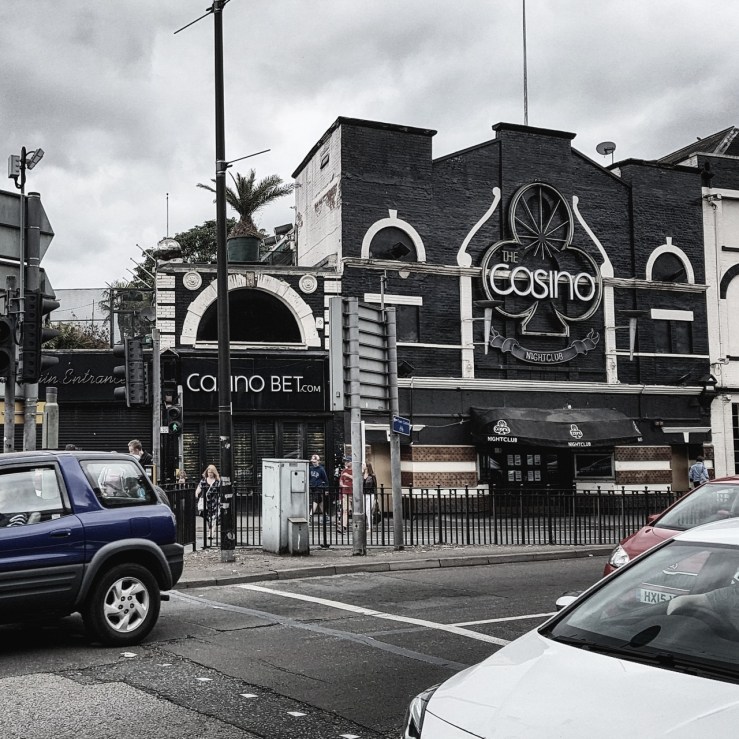
A recent photo I took in Guildford (June 2018), on my Samsung Galaxy S7, and edited using only Instagram’s edit tools.
Started with a fairly normal photo, but I wanted to really bring out the texture on the top of the building (back bricks). I used the Inkwell b/w filter, but reigned it in a bit, then re-saturated the photo a touch to give it a bleak feel.
I added a touch of shadows, and a touch of highlights – but not too much of either, as the overall aesthetic needed to be harsh with little to no adjustment. It needed to feel real, and spontaneous, while still displaying an air of uniqueness that only comes through editing.
Chris JK

Source: Neckkiss (Tumblr)

 Chris JK photo blog