Hanimex 400mm F/6.3 (M42) – a slight disaster

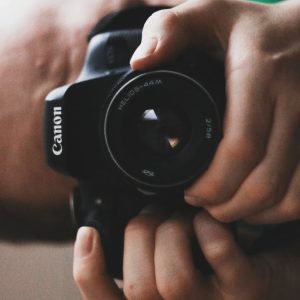
My second purchase on eBay was a Hanimex 400mm F/6.3 telephoto lens, which came in its original brown leather case & with a skylight filter.

It was £24.99, and as an M42 lens I thought it was a perfect purchase.

I’d already bought the Tokina mirror lens, and after reading a few reviews about the donut bokeh on mirror lenses being an annoyance to some photographers, I thought I’d buy a 400mm ‘normal’ telephoto lens as well, just in case the mirror lens doesn’t work out.

I knew it would be a heavy lens, but at least this way, I’d have the best of both worlds: a portable mirror lens, and a long range telephoto lens for when I need a tripod.


But it wasn’t M42

However, when it arrived, I soon realised it wasn’t an M42 mount lens, despite the listing specifying it had the M42 screw thread.

It wasn’t that it was a different mount – in fact, there was no mount at all. Just a hollow pole at the rear of the lens.

If there was a bayonet or screw thread, I may have been able to source an adapter of some kind.

But if there ever had been a mount of some kind at the rear of the lens, it looked like it had been removed – meaning, that I now had to source some kind of impossible adapter, to adapt a mount-less lens to my Canon EF-S mount.

Problem was… I couldn’t find any suitable adapters online, because none of the adapters I found would simply plop onto the end – they were either bayonet or screw adapters.

I thought it might have been a T-mount, as I’ve read online that M42 is often mistaken for T-mount. However, after sourcing a T-mount adapter & buying it, I found – upon delivery – that it wouldn’t fit. The centre of the adapter was too small, and the rear of the lens too big.

So, the lens had to be returned. A shame, really, as it would’ve been a great addition to my new collection of vintage camera lenses.

From a cursory glance through the lens, holding my camera up to its rear, it looked like it had a long throw – and suitable for my usage.

But, with no way of mounting it to my camera – not even with adapters – I would’ve had to manufacture my own kind of adapter to use the lens. That would’ve made the lens a really expensive purchase, as I don’t own any of the appropriate machinery or tools for such a job.

I suspect it would be cheaper to buy a brand new Tamron, Sigma or Canon 75-300mm telephoto zoom – or even a Canon L series lens – than to source the machinery & tools, materials and skills to manufacture a lens adapter to use specifically, and only, with this particular lens.

Lesson learnt: best to double check the lens mounting, and try to avoid eBay listings that don’t visually show said mounting – as not everything you can buy on eBay is perfect.

– Chris JK.

Tokina TM500 – my 2nd vintage lens purchase

After discovering a whole world of vintage lenses that can be adapted to work with modern DSLR’s – and after purchasing a £5 lens whilst on holiday in Cornwall in October 2019 – I set about acquiring a couple more of them.

There was only one place for it: eBay.

I’ll blog shortly about my 2nd eBay purchase – technically my 3rd vintage lens purchase, which turned out to be a minor disaster, and which needed to be returned to the seller – but first let’s talk about my second vintage lens purchase.

This time, I went for a mirror lens. I wanted a lens with a long focal length, and although I’d read some bad reviews about the donut bokeh, almost all reviews mentioned the value proposition of mirror lenses.

Generally, they’re cheaper and more portable than telephoto lenses with the same long focal lengths. If I could cope with the donut bokeh, I was already sold.

I’ve already got a Helios 44-M 58mm f/2, Photax 200mm f/4.5 (both were my Dad’s, which he got with a Zenit EM SLR camera), and a Hanimex/Mirage 135mm MKII Auto f/2.8, but now I wanted something much longer. That didn’t mean replacing my Dad’s lenses – rather, adding more lenses to my growing collection, at a variety of different focal lengths.


I used my vintage lenses at Snetterton, July 2019

I used both of my Dad’s lenses for the first time at Snetterton in July 2019, to capture photos of racing cars at the BTCC Tests.

It’s important to note that with my Canon 750D having a 1.6x crop sensor (APS-C), it meant the Helios 58mm was operating as a 92.8mm lens, and the Photax 200mm was instead at 320mm.

But even then, the one issue I had with the Photax 200mm was that the focal length was still too short for some shots – and driver’s helmets, inside the cars, were barely visible.

The answer might’ve been a telephoto ‘zoom’ lens, such as a Tamron 75-300mm. But it wouldn’t have been a vintage lens, which is what I really wanted.


Why I want to use vintage lenses

With modern lenses, there’s the temptation to leave the camera on Auto and let the camera & lens do all the work. But vintage lenses force you to use your camera in Manual mode.

That’s because you won’t be able to control the aperture or focus from the camera body, and the camera also won’t be able to control these on Auto modes. You have to switch to Manual mode.

Many reviewers, bloggers and YouTubers point to the lack of Autofocus being a huge disadvantage – but in my opinion, it’s actually a massive benefit. Especially if you’re new to DSLR photography.

Why buy a DSLR, if I’m always going to use it in Auto mode? It’s like buying a Ferrari to drive to the shops.

Sure, there’s occasions when Autofocus is useful – especially for Professionals who just want to get a good shot quickly – but I personally wanted to learn the ‘Manual’ side to my camera, and to become a better photographer.

I felt there was no better way to do that, than to use a vintage lens in Manual mode. And this is the reason I’m excited to buy vintage lenses: because they’ll challenge my skills as a [fairly new] photographer.


At Snetterton, why not use a teleconverter?

At Snetterton, I could’ve used my Dad’s Vivitar 2x teleconverter, which he’d also used on his Zenit EM with both the Helios and Photax lenses.

However, I’d read that while a 2x teleconverter would double the fixed focal length to 400mm (or 640mm on my 1.6x crop DSLR), I would likely lose one or two F-stops of aperture.

At the time, I wasn’t that experienced with vintage lenses – in fact, the day out at Snetterton was my first real world test of using them. Therefore, I wanted to leave the teleconverter off, so that I could experiment with the full range of apertures, shutter speeds and ISO settings.

Considering it was my first time, I’d say it went fairly well, as I ended up with just over 100 ‘usable’ photos from the whole day – out of about 1000 photos altogether.

That wasn’t bad for my first time, especially given that I was only using vintage lenses. With newer lenses, I reckon that number of usable shots might’ve been closer to 700.

(2021 Update: now that I’ve had a bit more experience, I’ve used the teleconverter a few times with the Photax 200mm. It does reduce the lens from f/4.5 to about f/6 or f/8, but there’s no donut bokeh like on my mirror lens, so that’s a benefit.)


My first vintage lens purchase – a Tokina TM500

So when it came to making my first vintage lens purchase, I went all out on the telephoto front: I acquired a mirror lens.

To be more specific, I got a Tokina TM500 f/8, in Pentax K mount. It cost about £54 from eBay – £42 with £12 postage, because of the weight.

The TM500 came in its original case and box, with its original filters, and with its original lens hood and caps.

It was in perfect condition, so even at £54 it was a fantastic purchase.

And, for a mirror lens, it was fairly cheap – if it had lived up to the many unfortunate, poor reviews of mirror lenses, then at least I hadn’t wasted so much money on it!

But, in reality, and after having used it now for a few weeks, I can definitely say it wasn’t a waste of money. In my experience, it’s an absolutely brilliant lens.

I shall write more about my Tokina TM500 in my full review of the lens – coming soon.

– Chris JK.

M42-EOS adaptors: using vintage lenses with my Canon 750D DSLR

For the past few weeks, I’ve been using my Dad’s old Zenit vintage lenses with my DSLR. He hasn’t used them for years, mainly because his Zenit SLR is a 35mm film camera, and using film is costly compared to digital.

But his lenses are in good condition, one is a Helios 44M Prime lens good for bokeh shots, while the other is a Photax 200mm telephoto lens – also a Prime lens with a fixed focal length.

However, such a feat wouldn’t have been possible without an M42-EOS adaptor, which converts the M42 screw-fitting to my DSLR which has a bayonet fitting. The adaptors are useful, and in my case, relatively cheap. Mine cost £8 FROM Amazon and also offers the AF-confirm function, which is useful for focusing on a subject with Manual Focus.

And by the way, to use a vintage M42 lens, I have to use fully Manual modes. Which I do anyway. Even since getting my DSLR two years ago, I’ve never used any of the Auto modes.

Manual is the only way to use a vintage lens, because there’s no way of controlling the lens aperture or focus via the camera body (only the shutter speed can be altered on the camera), so alterations to the aperture and focus have to be done on the lenses themselves.

I’ve set my camera to it’s maximum aperture, f/1.4, so the camera knows not to under-exposure via its image processing algorithms.

I’ve also found that my vintage lenses produce slightly pale-looking photos, but this is easily corrected via the White Balance settings on my DSLR.

I’ll be sharing my photos and notes on my Instagram and also my photo blog, Chris JK DSLR, so please do check these out.

Over and out,

-Chris JK.